Friday, March 29, 2013

The Crucifixion


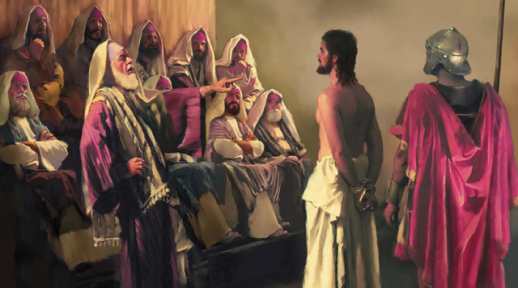
By the time the guards arrived at Annas house it was after midnight. Annas had been the high priest and still had a lot of power in Jerusalem but his son-in-law Caiaphas was now technically the man in chargeThey were about to put Jesus on trial then and there but they realized that although most people viewed Annas as the High Priest the one who had the real authority to judge Jesus would be Caiaphas so right there in the middle of the night they marched Jesus off to Caiaphas' house. Trying Jesus in the middle of the night was unlawful for the High Council to do for two reasons. First of all, under Jewish law, the High Council wasn't allowed to meet at night and secondly Passover began at sunset and under Jewish law, all feast days were considered to be Sabbath Days so Jesus couldn't be tried on a sabbath day. This didn't stop the High Council however because they knew that Jesus was loved by the people and if they tried him during the day the people would never allow it. They had to do it at night when no one else was around.

The Great Council (also called the Sanhedrin) had been planning this event for some time and they had several false witnesses lined up to testify against Jesus during the trial. They also rounded up as many malcontents as they could so they could have a mob of people present to call for Jesus' death.

John and Peter had followed the guards when they took Jesus but the rest of the apostles hadn't so they were the only two apostles present. They were surrounded by people who were not friends of Jesus so they kept their identity secret. At the palace of Caiaphas, the apostle John knew one of the servants and he managed to get himself and Peter into the courtyard. A crowd of people were starting to gather there expecting the arrival of Jesus and several of the temple guards were there as well. A portion of Caiaphas' house, or more accurately palace, was set apart for administering justice and also contained a pit where prisoners awaiting trial could be kept and a scourging room where justice could be handed out as required. 

Peter and John had been out in the courtyard but when Jesus was brought into the room where the trial was to be held they left the courtyard to enter the room. A woman stopped Peter and looking at him she thought she recognized him. She asked him if he wasn't one of Jesus' followers and Peter immediately denied it saying, "I am not!"

Being in the room where Jesus was being tried finally wore on Peter who was becoming very nervous and he went back out into the court yard. The night was cold and a fire was going to keep the people warm. As Peter stood by the fire to keep warm another man also standing by the fire said to him. From your accent it sounds like you're from Galilee, aren't you one of Jesus followers? Peter again denied knowing Jesus saying, "Of a truth, I am not!"

Things weren't going well for the Sanhedrin at Jesus' trial. While they had many witnesses they told conflicting stories and under Jewish law, if you were going to hand down the death sentence you had to have at least two witnesses and three was better. They were having a hard time finding two who would agree. 

Finally one of the witnesses told how Jesus had said that he would destroy the temple that had been made with hands and then in three days he would rebuild the temple without hands. This of course was blasphemy since only a God could do that. 

They now had one witness and if they could find a second witness then it would be enough. A second man was found who corroborated the story of the first man and Jesus was then sentenced to death. Hearing the sentence, those in the courtyard began to taunt Jesus. Everyone present was friendly to the Sanhedrin (with the obvious exception of Peter and John) and they spit on him and blindfolded him and then punched him laughing and telling him that if he was a prophet then he should tell them who it was that hit him. 


As the commotion in the room where the trial was being held grew, Peter worked his way back to the door to try and get a better idea of what was going on. As he did so one of the temple guards came to him and said he thought he recognized him. The guard was actually related to the guard who's ear had been cut off and he sure thought Peter looked familiar, wasn't he one of those who had been there in Gethsemane? Peter then became angry and adamantly denied knowing Jesus and as soon as the words left his mouth the cock crowed. Hearing the cock crowing reminded Peter of what Jesus had said only a few hours before and he left the palace of Caiaphas and wept bitterly. 

I think all too often we are quick to call Peter a coward because of this denial but we know that isn't true. Just a few hours before he was willing to take on the entire temple guard single handedly which would have surely led to his death. And then when all of the apostles abandoned Jesus only Peter and John followed him into Jerusalem. I like to think that perhaps Peters denial of knowledge of Jesus may have been more motivated by a desire to avoid conflict. Several times throughout Jesus ministry he had been chastised by Jesus for acting before thinking the most recent admonishment happening that same night when he drew his sword against the guard. Jesus had told him that he who uses the sword will die by the sword. Perhaps Peter wept more due to the realization that Jesus was going to allow himself to be killed that night. 

The grand council now had their man and were able to convict him of blasphemy which under Jewish law carried the death penalty but now they had another problem. While the Romans allowed Judea to rule themselves they held the death penalty for themselves. They were the only ones who could sentence a man to die and the Sanhedrin knew that Romans with their many and confusing gods would find the concept of blasphemy amusing. They finally decided to accuse Jesus of treason, a charge that the Romans would definitely take seriously. 

In order to get the death sentence Jesus was then taken to the Romans and Pilate was the Governor in charge of Judea.  At the Roman Praetorium a large crowd had gathered. This would have been very unusual for this early in the morning and the crowd was very angry and hostile towards Jesus. This too would be surprising in light of the royal welcome Jesus had received just a few days earlier as he entered Jerusalem on a donkey. A comment made by Matthew suggests that the Sanhedrin had been rounding up a crowd of Jews from the dregs of society. They wanted to put on a show for Pilate making it look like the people were against Jesus. It was also around this time that Judas realized his great mistake. While we don't know why he did what he did it appears obvious that he didn't think Jesus would be killed. Once Judas realized that Jesus was to be put to death, he returned to the grand council and tried to return the money he had been paid. They refused to take it so Judas left it behind. They couldn't put the money back in the Treasury because it was now blood money (seems odd don't you think? They could pay blood money but not receive it.). When Judas left without the silver the Jewish leaders decided that they would use the money to buy land to be used as a cemetery for poor people. 


By the time Jesus arrived at the Praetorium where Pontius Pilate was, the courtyard was filled with the low life from Jewish society. Only the earliest of the common people were rising as the sun wasn't even completely up yet. The Sanhedrin refused to enter the home of a Gentile as this would defile them so the trial had to be held outside. Pilate quickly realized that this man was no threat to the Roman empire and told the Grand council that he found no fault in him. The crowd went wild demanding that Jesus be put to death. To make matters worse Pilate's wife told him that he should have nothing to do with this man. She had dreamed about him and she knew that he was a just man. At some point Pilate heard someone say that Jesus was from Galilee. He thought sure this was his way out. Galilee was not in his jurisdiction but rather in Herod's jurisdiction. As it happened Herod was in town due to the Passover feast so Pilate told his soldiers to take Jesus to Herod. 

During all of this Jesus never spoke a word. Herod was thrilled to see Jesus. He'd heard of him and had always wanted to meet him. He too found no fault with Jesus and when the Grand Council told him that he claimed to be a King, Herod thought that was quite funny. He found a beautiful robe and put it on Jesus. The Grand Council brought Jesus back to Pilate. This time when Pilate asked Jesus if he was the King of the Jews he told him that his Kingdom was not of this world. It bothered Pilate that he claimed to be a king at all.

Still looking for a way out of putting Jesus to death he came up with another idea. Traditionally the Romans would release a prisoner during the Passover feast. Pilate was sure that if he gave the crowd a choice between a murderer named Barabbas or Jesus they would surely pick Jesus but to his surprise the crowd chose to release the murderer and to crucify Jesus.

Pilate really didn't want to put Jesus to death so he finally decided that perhaps if he scourged Jesus then that may pacify the angry crowd. Jesus had still not been convicted of any crime but off to be scourged he went. The Romans had perfected the art of scourging to a "T". Just a leather thong would rarely break the skin no matter how hard you whipped a man but if you braided three strands of leather into a single strand with little bits of bone and metal in the strands of leather then even a mild lashing would tear ones flesh. 


Even as the Temple Guards had great fun mocking Jesus as a prophet, the Roman soldiers had great fun mocking Jesus as a King. They put a reed in his hand and pretended it was a scepter. They made a crown out of thorns and put it on his head. When Jesus was returned to Pilate scourged and wearing the crown of thorns and still dressed in the royal rob he led him out onto the balcony and presented him to the crowd. Pointing to Jesus he declared, "Behold the Man!" 

The crowd, led by the Sanhedrin began to cry out, "crucify him, crucify him". In frustration Pilate turned to Jesus and said, "from whence do you come?". When Jesus still refused to answer he again angrily asked him why he wouldn't talk to him, "don't you realize that I have the power to release you or to crucify you?" he said. Jesus then responded saying, "you could have no power over me at all if it weren't given you from above." This really shook Pilate and surely he was remembering the dream that his wife had told him about. 

He tried again to release Jesus as was customary for the passover but the Sanhedrin insisted that he release Barabbas. Pilate then asked what they wanted him to do with Jesus and they cried out again, "Crucify Him!"

"You would have me crucify your King?" Pilate asked. And they responded that they had no king but Caesar. 

Finally someone yelled out that if he let Jesus go then he was no friend of Caesars. That wording was no accident. The local Governors were often referred to as a "friend of Caesar". When Pilate heard this he resigned himself. He wasn't in good standing with Caesar because of earlier mistakes he had made with the Jews. He couldn't afford another one. Pilate ordered a bowl of water and a towel and washed his hands of the whole affair. After washing his hands he raised them to the crowd; in particular the members fo the Sanhedrin and declared that he was innocent of the blood of this man. And then Pilate sentenced our Lord to be crucified. 

Washing ones hands to absolve themselves of a sin was actually a Jewish law and when Pilate chose to do this it suggests that he was aware of the Jewish custom and he did it deliberately so they would understand the significance of it. 

A Roman crucifixion is one of the more cruel methods devised to kill a man. It often took several days for a man to die on the cross and to enhance the effect crucifixions were usually performed along side a major road so as to be witnessed by as many people as possible. The crucifixion of our Lord was to take place at Golgotha. The vertical pole of the cross was normally planted permanently in the ground and the cross beam was carried by the condemned man. The cross beam would be laid across the condemned mans shoulders and his outstretched arms were tied to the beam. The beam had to be thick enough to take the nails and to support the weight of the prisoner. This meant that the beam usually weighed well over a hundred pounds. 

By the time the cross was laid upon Jesus's shoulders and he began his walk to Golgotha word of Christs sentence had spread. A very large and solemn crowd gathered along the road. This was a very different crowd than what had filled the Praetorium a few hours earlier. These people, the common people, were in shock. They must have been very confused. While those close to Jesus surely realized that Jesus was not going to use his power to save himself, most of the people who had witnessed his many miracles must have been waiting for him to save himself and when he didn't they were probably quite baffled. The Messiah they were waiting for was supposed to come in his glory and free the Jewish people. 

By this time Jesus was extremely weak. He'd been up all night long, endured the indescribable suffering in Gethsemane, been subjected to hours of abuse and most recently the horrific scourging at the hands of the Roman soldiers. It had taken it's toll and together with the loss of a lot of blood the burden of the cross was too much for him to bear. A man from Cyrene who'd been watching the events from the side of the road was forced to carry Christs cross for him.

The crowd included several women who were crying for him. This went on for some time and at one point Jesus stopped and turning to the woman said, "Daughters of Jerusalem, weep not for me, but weep for yourselves and for your children. For behold the days are coming, in the which they shall say, "Blessed are the barren and the wombs that never bare, and the paps which never gave suck.""

Golgotha is thought to be just outside the city walls north of Jerusalem. Most likely it was at the foot of a hill beside the roadway and not on top of the hill as is so often depicted in paintings. Another common legend that is likely incorrect is the cross that was used. While the Romans had many different crosses, the one that was most commonly used in Judea at the time of Christ was called a Tau cross after the Greek letter Tau which is equivalent to our letter "T". It was named this because that describes what it looked like. The cross beam that Jesus had carried to Golgotha with him would be nailed to the top of the post so that it could easily bear his weight. With the cross beam on the top of the pole it would look just like the letter "T".

The cross beam was laid on the ground and Jesus was laid on top of it. At first a nail was driven through the palm of his hand and then, to prevent the first nail from tearing though the flesh of his hand a second nail was driven through his wrist. Care had to be taken not to hit a major artery since this would allow the condemn man to bleed to death quickly and that would have been far too merciful. Once Jesus was nailed to the beam two solders lifted it up to the top of the pole where it was nailed in place. Jesus feet would then have been nailed to the pole. Most likely a single nail was used and driven through both feet. It was also common to provide a crude seat on the pole for the victim to sit on. 

Jesus was offered a drink of vinegar which was actually to help deaden the pain. When Jesus realized what it was, he refused to drink it. Apparently he wanted to face this ordeal with all of his faculties fully alert. At one point, as the crucifixion was taking place Jesus looked up towards Heaven and cried out, "Father! Forgive them for they know not what they do."

Jesus had worn the robe that had been given him to the site of the crucifixion but before he was nailed to the cross he was stripped of all of his outer clothing. As was tradition, the soldiers performing the crucifixion got to keep it. They drew lots to decide who got to keep what. 

All crucifixions had a title board at the top of the cross that gave the name of the criminal and the crime for which he was being crucified. Just to stick it to the Sanhedrin, Pilate had very specifically directed the Jesus' title board to read "Jesus of Nazareth, King of the Jews" written in Greek, Hebrew and Latin. This incensed the Sanhedrin and they insisted that it be changed to read that he "claimed" to be King of the Jews. Of course it was not changed. 

Most of the crowd who had watched the procession had dissipated by now and it was a strange group of people who remained. There were the Romans who carried out the crucifixion, some members of the Sanhedrin who had instigated it and then there were his apostles and friends including Mary his mother. Some of the Sanhedrin mocked Jesus telling him that if he was truly the Messiah then he should save himself from the cross and then they would believe him. Finally they too drifted off. 


Two other prisoners had been crucified along with Jesus that morning, one on either side of him. No sooner had the mocking from the Sanhedrin ended when one of the prisoners began mocking him as well. "Art thou the Christ?" he said. "If you are save yourself and us." The other criminal however came to Christs defense and speaking to the other criminal he told him to leave Jesus alone. They were all going to die that day but at least they deserved what they got, Jesus on the other hand had "done nothing amiss." He then asked Jesus if he would remember him when he came into his Kingdom. Jesus responded by saying, " Verily I say unto you, on this day, you shall be with me in paradise."

It was still the middle of the day when the sky's went dark. Members of the Sanhedrin, incensed over the sign declaring Jesus the King of the Jews went to Pilate insisting that he change it. He flatly refused and dismissed them. They then reminded Pilate that they couldn't allow a prisoner to die on the sabbath which began at sunset. Pilate must have found it amusing that they could execute an innocent man but just don't let him die on the sabbath. Even so he issued an order to make sure the prisoners all died before sunset. As I said earlier, it can take a man days to die on the cross. When death finally does come it is actually due to suffocation. If the prisoners body hangs limp on the cross he can't breathe so in order to breathe he must alternately pull himself up with his arms or push himself up with his legs. If he is lucky enough to have a little seat he can use that to prolong the inevitable. Finally when he has no more strength, his arms and legs give out and he hangs down and suffocates. If it is necessary to hasten a prisoners death then it was common to break his legs thereby preventing him from supporting his body with his legs. It is then usually just a few hours before he will die.

Not long after the Sanhedrin left Pilate another member of the great council called upon him. His name was Joseph of Arimathea. Joseph was a supporter of Jesus and so was probably not too popular in the Sanhedrin and he had come to Pilate to ask for permission to take Jesus body and bury him in his own tomb. A tomb that had never been used. Pilate was probably happy to have one less problem to deal with.


Meanwhile, Jesus surrounded by the Roman soldiers and his friends finally spoke and called John and his mother Mary to him. To give his mother the highest honor he could he called her "Woman" and then referring to John he said, "behold your son". And then referring to his mother he spoke to John and said, "behold they mother!". In this manner he asked John to care for Mary as if she were his own mother and that is precisely what he did. From that day forward Mary moved in with John and he cared for her the remainder of her days. 

Several hours later Jesus became restless on the cross and finally he spoke again. Looking towards the heavens he called out, "My God! My God! Why hast thou forsaken me?" Up until this point Jesus had received constant support from his Heavenly Father through the Holy Spirit. Now, for the first time God had withdrawn his spirit and Jesus was required to bear this burden on his own. It must have been quite alarming for him. Not long after this Jesus spoke again and said, "I thirst". The sponge, soaked in vinegar was once again raised to his mouth on the end of a reed. This time he did drink from it. A little while later Jesus spoke one more time. Again looking to the heavens he said, "Father. Into thy hands, I commend my spirit." and then finally, "It is finished."

As Jesus' body hung limp on the cross the Roman soldiers following Pilates orders arrived to break the legs of the prisoners. One of the soldiers picked up the club used for this task and unceremoniously broke the legs of the two thieves but when he came to Jesus he found him already dead. Jesus had only been on the cross for a few hours so this was incredulous. No one died that quickly in a crucifixion. Just to be sure, he drew his sword and thrust it into Jesus' side. This act fulfilled two prophecies made of his death that, "a bone of him shall not be broken." and "They shall look on him whom they pierced."


Suddenly there was a massive earthquake that shook the entire region and as the earthquake subsided a violent storm lit up the already black sky with tremendous lightning and ear piercing thunder. The soldiers then looked upon Christ's body that had finally found peace and whispered, "Truly, this man was the Son of God."

There wasn't time remaining in the day to give Jesus a proper burial before the beginning of the Sabbath at sunset. They prepared his body as best the could in the few remaining hours and then hurried back to Bethany where they were likely staying with Mary and Martha. They must have been eternally grateful to Joseph of Arimethea for offering his tomb.


Thursday, March 28, 2013

The Feast of the Passover


Today is the feast of the Passover. The Jewish day however begins at sunset and since the feast of the Passover begins at sunset they would say that today is the day before the Passover. With the Passover feast beginning at sunset everyone is spending this day preparing for it. It must have seemed strange to the Apostles when Jesus told them that he wanted to celebrate this passover with them and not with family. After all he was staying with Mary, Martha and Lazarus who were just like family and I'm sure they expected him to share this feast with them.


So if they weren't going to share the Passover feast with family then where were they going to have it? Jesus told two of his disciples to go into Jerusalem (there is that rough hike over the Mount of Olives again) and they would see a man carrying water. They were to follow him to a house and they were to ask the "Goodman" of that house if they could use his "guest chambers" for the "Master". To top it all off the room would be already prepared for the Passover meal. By this time the Apostles must have been used to the strange requests that the Lord made of them.

The Passover meal follows a very specific sequence of events. First of all the meal is traditionally lead by the head of the household. For this meal, Jesus obviously led the meal. The Passover meal is divided into four segments. In the first segment the person leading the meal offers a prayer and then everyone drinks the first of four glasses of wine. The family then eats celery sticks that have been soaking in salt water. This is to remind them of the tears that were shed by the Israelites while they were slaves in Egypt. Next comes the telling of the story of Exodus. This is always begun by the youngest male in the family (who can understand the question)  asking the question, "Why is this night different from all other nights?". The leader of the meal then tells the story of the Exodus. Psalms are then sung and the second cup of wine is drunk.  Next was the formal meal with the Paschal lamb, the bitter herbs and the unleavened bread. The bitter herbs (most commonly horseradish) are to remind them of the bitterness of their bondage while slaves in Egypt. Another prayer and the third cup of wine. Finally the leader of the meal sings additional psalms and the last cup of wine is drunk. 

At sunset Jesus and his apostles arrived at the upper room for their passover meal. The meal probably started normally but at some point it became very non-traditional. Jesus took the loaf of bread and broke off a piece for each of his apostles who were probably wondering what that was all about. He then told them to eat of the bread which represented his body. He then filled a cup with wine and had them all drink from it. He told them this represented his blood which was shed for them and for many others. He then told them that he would not drink of the fruit of the vine again until he drinks it with them new in the Kingdom of God. 


Jesus then went and got the bowl and pitcher of water that is normally used to wash the feet of guests as they enter ones home, a task that is normally done by servants. When Jesus knelt before his apostles and began to wash their feet they were horrified. So much so that when it came Peter's turn he said to Jesus, "you would wash my feet?" Jesus told him that even though he didn't understand why he was doing this, the time would come that he would understand. Peter still refused to let the Lord wash his feet. Jesus told him that if he didn't let him wash his feet then Peter would have no part of him. Of course Peter not only wanted Jesus to wash his feet but his hands and his head as well. Jesus told him that if he washed his feet then he would be clean all over.

Once he had washed all their feet he then returned to the table and admonished them to follow his example and they should be servants unto each other. He then mentioned that they weren't all clean but that there was one sitting at the table with him who would betray him. The apostles were astonished and asked one by one if it was him. 

Jesus then said that it was he to whom he gave the sop. Jesus then dipped a piece of the bread into one of the many sauces that they have with their passover meal and handed it to Judas. Since the table was large and difficult for everyone to reach the various bowls it was considered an act of deep respect to have someone dip your bread for you and then hand it to you. Jesus then told Judas to do it quickly. Judas was obviously embarrassed and left the room but most of the apostle didn't understand what was going on and they wondered where he was going.  He told them that he had one more commandment for them. To love one another. "By this shall men know that ye are my disciples, if ye have love one to another."

Jesus then tried to comfort his apostles and told them that his time with them was short and that they would not be able to follow where he was going, at least not at that time, but they could follow later. Peter apparently knew what he was talking about and declared that he would follow him anywhere whether it was in prison or in death. Jesus looked at him and told him that he would deny that he knew him, not once but three times before the cock would crow the very next morning.

Peter who had just promised to die for Jesus was stricken by the remark. Finally Jesus comforted him saying, "let not your heart be troubled. I go to prepare a place for you. And if I go and prepare a place for you, I will come again and receive you unto myself. I will do this, that where I am, there you may be also,"

Jesus then told his disciples that he would not leave them comfortless but that he would leave the Holy Ghost, The Comforter. If one is willing to listen, the Holy Spirit will teach him all things, bear witness to the truth, bring all things to your remembrance and bring peace to your heart.

Finally Jesus became much more solemn and told them how they would be persecuted, thrown out of the synagogues. He then said that whoever put them to death would think that they are doing God a service. 

Put them to death?!?! How would that make you feel?
They then closed the meal by singing a hymn and then they left. When they left out of the east gate of the Temple the Apostles must have thought they were returning to Bethany but when they got to Gethsemane they turned off the main road and stopped in the grove of Olive trees. Gethsemane in Greek means Olive Press so this must have been a place where olives were pressed into oil. In any case, Jesus often stopped and rested on the Mount of Olives when they returned to Bethany and this may have been where they usually rested. Jesus asked his apostles to wait for him while he went off on his own but he did asked Peter, James and John to go with him. He then instructed them to wait with him while he prayed. 

During all of this Judas had found the Sanhedrin and told them where they could find Jesus. Not wanting to get the wrong person they insisted that Judas remain with them and when they found them to make sure he identified exactly who Jesus was. He agreed to do this by kissing Jesus.


Peter, James and John were probably close enough to Jesus to witness to some extent the agony that he was going through. They probably heard him cry out to the Father to "let this cup pass from me." And then moments later his resolve to endure what had to be done as he said, "Nevertheless...not as I will be as thou wilt." We can't understand just how the atonement took place or how it works but we do know that there in that Garden on this very night more than two millennia ago Jesus suffered for our sins and by so doing he paid the price necessary for my soul to return to my Father in Heaven. The pain of that suffering was so great that he sweat drops of blood. Some have argued that this was only figurative but I believe it was real. Sweating blood has been documented to happen in rare cases of extreme pain and the pain that our Lord suffered on this night exceeds any pain ever suffered by mortal man. The pain that Christ was to suffer during the following day was nothing compared to the pain that he suffered there in that garden for you and I.


I feel sorry for Peter, James and John. It was late, they'd just eaten a good meal and they were exhausted. I've been in that situation and no matter how hard I try I just can't keep my eyes open. I don't think I could if my life depended upon it and so it was with Peter and his brethren. Jesus returned twice and chastised them saying, "What? Could you not watch with me for one hour?" That would be me. The third time Jesus let them sleep without disturbing them and endured his suffering alone. But he wasn't alone, Angels came to give him strength during his ordeal. 

When it was over Jesus woke his apostles and told them that "The son of man is betrayed into the hands of sinners. Rise up. Let us be going. He who shall betray me is at hand." As they were leaving, Judas met them and greeted his Lord by kissing him. The guards who came to take Jesus were not Romans but rather Temple guards who answered to the Sanhedrin. The guards had been standing back in the dark out of sight but as Judas identified who Christ was they came forward to arrest Jesus. The apostles were probably on the alert from the moment Jesus said he'd been betrayed and when one of them approached Jesus, Peter quickly swung his sword at the guard who came forward and cut off the guards ear. Jesus reproached Peter and said that those who take the sword shall perish by the sword. Jesus then pointed out that if he wanted he could ask Heavenly Father to send down twelve legions of Angels to save him "but how then shall the scriptures be fulfilled?" Jesus then reached forth and restored the guards ear. Can you imagine how he must have felt? I don't know if he continued with the other guards to take Jesus to Annas but if he did I'm sure it was out of duty and his heart was no longer in it. 


Wednesday, March 27, 2013

The Olivet Discourse

This morning, the day before Passover, Jesus and his disciples headed once again into Jerusalem. As they reached the summit of the Mount of Olives they came to the fig tree that Jesus had cursed yesterday. It was completely dead with scarcely a leaf left on it. Even if it had been cut down the tree wouldn't have died so quickly. This is the first miracle performed by Jesus that destroyed rather than healed. It must have seemed just as odd to Jesus' disciples as it does to me that he would curse a tree. As with everything that Jesus did in his life it must have had a purpose but there is no record anywhere that would explain why he did what he did.

One possible explanation that I've heard that makes sense to me is that Jesus used it as an example of the danger of hypocrisy. If you think about it, the tree was a hypocrite. A fig tree normally bears fruit at the same time that it leafs out. This tree had leaves which would suggest that it would bear fruit but upon closer inspection it had no fruit. This could be compared to a person who pretends to be something good but in actuality isn't. Jesus did to the tree the same as he did with the Sanhedrin and the Pharisees yesterday and attacked them quite forcefully.

I can only imagine that after the first two days that they spent on the Temple Mount that Jesus' disciples were on constant watch for retaliation from the Sanhedrin or for another confrontation but none came. At one point one of the disciples commented on the majesty and beauty of the Temple. Jesus responded by drawing their attention to the Temple and telling them that soon there would not be one stone left upon another. Remember that this temple took forty years to build and it contained massive stones. This prophetic statement must have seemed impossible to them but they probably remembered that just two days earlier as they made their grand entrance into Jerusalem Jesus had stopped on the path coming down off of the Mount of Olives and made the same prophecy about how Jerusalem would be surrounded by their enemies and destroyed and that not one stone would be left upon another. These last few days with Jesus must have been very solemn days.


As they left Jerusalem and returned to Bethany they got part way up the Mount of Olives and then suddenly Jesus turned and led them on a path that lead off of the main road. He found a comfortable spot and together they sat there and admired the beautiful view they had of Jerusalem. Finally Peter got the guts to ask what must have been on all of their minds. He referred back to the comments that Jesus made while they were in the temple. He asked Jesus when these horrible things would happen to Jerusalem and then almost as an afterthought he reminded Jesus that he had told them that he would return before the end of the world and he asked what signs they would have of his return.

The response that Peter received to his question was probably a lot more than he had expected and includes most of Matthew 24.


4 And Jesus answered and said unto them, Take heed that no man deceive you.
5 For many shall come in my name, saying, I am Christ and shall deceive many.
6 And ye shall hear of wars and rumours of wars: see that ye be not troubled for all these things must come to pass, but the end is not yet.
7 For nation shall rise against nation, and kingdom against kingdom: and there shall be famines and pestilences, and earthquakes, in divers places.
8 All these are the beginning of sorrows.
9 Then shall they deliver you up to be afflicted, and shall kill you: and ye shall be hated of all nations for my name’s sake.
10 And then shall many be offended, and shall betray one another, and shall hate one another.
11 And many false prophets shall rise, and shall deceive many.
12 And because iniquity shall abound, the love of many shall wax cold
13 But he that shall endure unto the end, the same shall be saved.
14 And this gospel shall be preached in all the world for a witness unto all nations; and then shall the end come.


15 When ye therefore shall see the abomination of desolation, spoken of by Daniel the prophet, stand in the holy place, (whoso readeth, let him understand)
16 Then let them which be in Judea flee into the mountains:
17 Let him which is on the housetop not come down to take any thing out of his house:
18 Neither let him which is in the field return back to take his clothes.
19 And woe unto them that are with child, and to them that give suck in those days!
20 But pray ye that your flight be not in the winter, neither on the sabbath day:
21 For then shall be great tribulation such as was not since the beginning of the world to this time, no, nor ever shall be.
22 And except those days should be shortened, there should no flesh be saved: but for the elect’s sake those days shall be shortened.
23 Then if any man shall say unto you, Lo, here is Christ, or there;
24 For there shall arise false Christs, and false prophets, and shall shew great signs and wonders; insomuch that if it were possible, they shall deceive the very elect
25 Behold, I have told you before.
26 Wherefore if they shall say unto you, Behold, he is in the desert; go not forth: behold, he is in the secret chambers; believe it not.
27 For as the lightning cometh out of the east, and shineth even unto the west; so shall also the coming of the Son of man be.
28 For wheresoever the carcase is, there will the eagles be gathered together.
29 Immediately after the tribulation of those days shall the sun be darkened, and the moon shall not give her light, and the stars shall fall from heaven, and the powers of the heavens shall be shaken:
30 And then shall appear the sign of the Son of man in heaven: and then shall all the tribes of the earth mourn, and they shall see the Son of man coming in the clouds of heaven with power and great glory.
31 And he shall send his angels with a great sound of a trumpet, and they shall gather together his elect from the four winds, from one end of heaven to the other.
32 Now learn a parable of the fig tree; When his branch is yet tender, and putteth forth leaves, ye know that summer is nigh:
33 So likewise ye, when ye shall see all these things, know that it is near, even at the doors.
34 Verily I say unto you, This generation shall not pass, till all these things be fulfilled.
35 Heaven and earth shall pass away, but my words shall not pass away.
36 But of that day and hour knoweth no man, no, not the angels of heaven, but my Father only.
37 But as the days of Noe were, so shall also the coming of the Son of man be.
38 For as in the days that were before the flood they were eating and drinking, marrying and giving in marriage, until the day that Noe entered into the ark,
39 And knew not until the flood came, and took them all away; so shall also the coming of the Son of man be.
40 Then shall two be in the field; the one shall be taken, and the other left.
41 Two women shall be grinding at the mill; the one shall be taken, and the other left.
42 Watch therefore: for ye know not what hour your Lord doth come.
43 But know this, that if the goodman of the house had known in what watch the thief would come, he would have watched, and would not have suffered his house to be broken up.
44 Therefore be ye also ready: for in such an hour as ye think not the Son of man cometh.
45 Who then is a faithful and wise servant, whom his lord hath made ruler over his household, 
to give them meat in due season?
46 Blessed is that servant, whom his lord when he cometh shall find so doing.
47 Verily I say unto you, That he shall make him ruler over all his goods.
48 But and if that evil servant shall say in his heart, My lord delayeth his coming;
49 And shall begin to smite his fellowservants, and to eat and drink with the drunken;
50 The lord of that servant shall come in a day when he looketh not for him, and in an hour that he is not aware of,
51 And shall cut him asunder, and appoint him his portion with the hypocrites: there shall be weeping and gnashing of teeth.

The disciples must have looked out over the beautiful city of Jerusalem and tried to imagine the horror that was to come. Jesus then told the parable of the ten virgins. He told them that his return would be like the bride groom at a wedding. In Jesus time the groom traditionally prepared for his wedding at the home where he and the new bride would be living. Meanwhile the "bride to be" was preparing at her parents home. When the time for the wedding came the groom and his male friends would parade through the streets to where the bride was and pick her up and lead her back to their new home where the wedding would be performed. The entire time as they are marching through the streets they are calling out for their friends to join them. Once they all return to the grooms home the wedding is performed and the partying begins; sometimes lasting through the night. 


In this parable there were ten virgins waiting for the bride groom to come so they could join in the celebrations. Five of the girls were unprepared and their lamps ran out of oil. While they were off getting more oil the bridegroom came by and the five virgins who were prepared joined the party but the five who were not prepared missed it. 

Jesus ended saying, "Watch, therefore, for you know neither the day nor the hour wherein the Son of man cometh."

Jesus then shared the parable of the talents and following this story he described how the Son of Man shall come in his glory and sit on his throne and divide his people as a shepherd divides his sheep from his goats. He will then set his sheep on his right hand and invite them to enter into his kingdom for when he was hungry they fed him and when he was thirsty they gave him drink and when he was a stranger they took him in, naked and they clothed him. When he was sick they visited him and when he was in prison they came unto him. The people shall then ask when they did all of these things and the Lord shall tell them that "inasmuch as ye have done it unto one of the least of these my brethren, ye have done it unto me."

The prophecy that Jesus gave regarding the destruction of the Jews and his second coming includes details about the last days as well as prophecies regarding the time shortly after his death. Less than forty years following his crucification the Jewish revolution became so great that the Romans realized they had to put it down once and for all. At one point the Romans entirely surrounded Jerusalem and for some unknown reason they retreated. When the Christians at that time saw this they remembered Jesus' prophecy "and when ye shall see Jerusalem compass with armies, then know that the desolation thereof is nigh. Then let them which are in Judea flee to the mountains." 

The Christians did flee to Pella, a city on the east side of Jordan and they were spared. The Romans came in and killed more than a million Jews. Judea ceased to exist as a nation of Jews. 

On another note, it was probably today, the day before Passover, that Judas went to the Sanhedrin with his offer to lead the Temple guards to Jesus in a quiet and secluded place and to identify him. Oddly enough, he chose to identify Jesus by kissing him.


Tuesday, March 26, 2013

Cleanse the Temple, Again

Today, two days before Passover, when Christ and his disciples walked from Bethany to Jerusalem it was a much quieter walk. There must have still been many people who came out to see them but there weren't the crowds experienced the day before. This time however when they arrived at the top of the Mount of Olives they came across a fig tree that was completely leaved out. This was a bit unusual for this early in the year but Jesus and his disciples were quite excited because a fig tree bears fruit at the same time it's leaves come on. When they went to pick some fruit to eat however there wasn't a single fruit on the entire tree. When Jesus saw that the fig tree bore no fruit he said, "Let no fruit grow on this tree henceforth and forever". This must have seemed like a very strange thing for Jesus to say but Jesus offered no explanation and simply carried on towards Jerusalem.

Most people are well aware of how Jesus cleansed the Temple by driving the "money changers" from it but many are not aware that he did that again at the end of his ministry just before his crucifixion. This cleansing probably took place on this day, three days before he died. There is also a single line that mentions that Jesus would not allow anyone to "carry vessels" through the temple. What was probably happening is that people carrying freight and making other deliveries to various parts of Jerusalem were taking short cuts through the temple grounds. Apparently Jesus put a stop to this as well as driving the money changers from the Temple once again.

The commotion caused by Jesus throwing out the money changers apparently drew the attention of the Sanhedrin who immediately came out and demanded of Jesus by what authority he thought he could do such an act. Jesus, as he so often did, answered their question with a question of his own. He told them that he would answer their question if they answered a question of his. He asked them if John baptized with authority of God or with his own authority. The Sanhedrin knew right away that they had been trapped, if they said it was on Gods authority then Jesus would ask them why they didn't accept John as a prophet but if they said he acted on his own authority then the people would be angry because most of the people accepted John the baptist as a prophet. The Sanhedrin responded that they couldn't say who's authority John acted on so Jesus simply replied that he couldn't answer either.

The people loved it. Most of them saw the Sanhedrin as a bunch of self righteous men who took advantage of their position and were far too removed from their lives. They loved to see them get embarrassed like this. Jesus then told a parable of a man who had two sons. He gave his son's a job to do and one of them refused to do it and went on his way. He later felt bad about what he'd done and went and did as his father had requested. The other son told his dad that he would do the job he'd been asked to do but then he left and didn't do it. Jesus then asked the Sanhedrin which of these sons did the will of their father. The answer was obvious but when they answered saying "the one who at first refused him"; Jesus looked them in the eye and told them that Harlots and Publicans would enter the kingdom of God before they did because the Publicans and Harlots believed John but they didn't.

Just in case they didn't see the comparison Jesus went on and told another parable about a man who built a large vineyard and hired people to run it for him while he went in a far away land. When harvest time came the man sent servants to collect the proceeds from those who were hired to run the vineyard. When the servants showed up for the money those who were in charge of the vineyard beat them and even killed some. When the servants didn't return the owner sent more servants but they too were beaten and killed. Finally the owner sent his own son saying to himself that surely those running his vineyard will have respect for his own son but when those in charge saw the owners son coming they killed him thinking that they would be able to keep all of the fruits of the vineyard.

Those who loved Jesus and were with him couldn't have missed the fact that Jesus was referring to himself as the Son who was killed and it must have dismayed them to hear him once again talk about his own death like this. The Sanhedrin however didn't get it at first because when Jesus asked them what would happen to those in charge of the vineyard they replied that the Father would destroy them and put others in charge of his vineyard. Jesus only nodded and gave them a moment for it to sink in.

Later on this same day Jesus was confronted once again by some Pharisees who tried to trap him in his words. In response to this Jesus delivered what may have been his most forceful attack on the Pharisees yet calling them hypocrites. How they make themselves beautiful on the outside but are filthy on the inside. He compared them to a tomb that is painted to be beautiful and white on the outside but is filled with the bones of dead men. During his entire life Jesus had been very patient and loving towards the sinner but it appears that the one thing he can't stand is a hypocrite. Following such an excoriating attack it is almost no wonder that the Sanhedrin hated him so much that they actually wanted to kill him.

The Sanhedrin was furious but they saw how the multitude loved Jesus and they didn't dare do anything  while he was surrounded by so many who loved him. It was probably this day that they looked for someone who would be willing to betray Jesus and let them know when and where he could be taken without all of the crowds around to witness it.

Monday, March 25, 2013

The King Enters Jerusalem


If a king in ancient Israel wanted to declare war on another city he would ride into that city mounted on a horse or in a chariot. If that King wanted to enter another city in peace he would announce his intention by riding into that city upon a donkey. Four hundred years before Christ, the prophet Zechariah prophesied "Rejoicing greatly , O daughter of Zion. Shout, O daughter of Jerusalem. Behold, thy King cometh unto thee. He is just and having salvation; lowly, and riding upon an ass, and upon a colt, the foal of an ass." 

Jesus left the home of Mary and Martha three days before Passover to go into Jerusalem. Bethany is at the bottom of the Mount of Olives opposite from the side of the mountain that Jerusalem is on. This meant that in order to enter Jerusalem they had to climb to the top of the Mount of Olives and then go down the other side.


As Jesus and his disciples neared the top of the Mountain the road passed near by the town of Bethphage. As they came to the road that led to Bethphage Jesus stopped and asked his Apostles to go into the town and there they would find a donkey tied up and with it would be a colt that had never been ridden by man. They were to bring the colt to him. He told them if anyone asked they were to tell them that the "Master has need of it".

The Feast of Tabernacles is a time when the Jews would celebrate their acceptance of Jesus as their King. They did this by waving palm branches or branches with fruit on them and calling out the words "hallel" meaning "Praise" and "Yah" meaning "Jehovah". These two words came to be "Hallelujah" or "Praise to the Lord". When those with Jesus recognized the significance of the donkey they spontaneously lined the road to Jerusalem and waved palm branches calling out "Hosanna" meaning "save now" and "Hallelujah" meaning "praise to the Lord".

By this time with the many miracles Jesus had performed, not the least of which was the raising of Lazarus just a few days earlier, his fame had spread throughout the land. He was famous. People had been watching for him and when they saw him coming they ran ahead to the let others know he was coming. The road was lined all the way into Jerusalem with people waving palm branches and throwing their cloaks and robes on the pathway before him. It must have been a very exciting time.

As they reached the summit of the mountain and began to descend into the Kidron valley the view of the Temple Mount must have been spectacular. The shouts of Hosanna and Hallelujah would have become even louder. Suddenly Jesus came to a halt and as he looked over the temple and the city of Jerusalem a sadness came over his face and tears to his eyes. His disciples must have wondered how things could go from jubilation and excitement to such sadness so quickly. Finally Jesus spoke and paraphrasing he said, "Oh Jerusalem, if only you knew what lay ahead for you, but you are blind and can not see it. The day will come when your enemies will surround you on all sides and destroy you so completely that not one stone will be left upon another." Finally he moved on towards the city and entered in through the Golden gate as a King.


Sunday, March 24, 2013

The Sanhedrin


After Jesus brought Lazarus back to life the Sanhedrin was in an uproar. The Sanhedrin was a ruling body that consisted of members from the Pharisees, Sadducees and other highly ranked members of Jewish society. When they saw the large number of people who followed Jesus (especially after Lazarus was raised from the dead) they became very concerned that they would lose their power but they were also concerned that the Romans would become concerned that so many Jews were following what they (the Sanhedrin) thought to be a rebel. It was about this time, a week before Passover, that the Sanhedrin decided that they would have to kill Jesus.

While the scriptures aren't clear, it was also about this time that Mary, the sister of Lazarus and Martha came to Jesus to anoint his feet with a very expensive ointment that she carried in an alabaster box. It must have been a solemn moment as she did this but as she finished Judas became angry and chastised Mary for wasting such an expensive ointment when she could have sold it for a large sum of money and given it to the poor. Jesus came to her defense and told Judas that it was a good thing she had done. He told him that the poor would always be among us but what Mary had done would always be spoken of as a memorial to her. Jesus then alluded once again to his death saying that Mary had come to prepare his body early for it's burial.

It seems clear that those who were close to Jesus had to have known what was coming.

Sunday, March 17, 2013

Lazarus is Raised from the Dead


Bethany was a small town on the eastern slopes of the Mount of Olives. It is only two miles from Bethany to the Temple Mount but it is a steep climb from Bethany to the top of the mount of Olives and then an even steeper drop down into the Kidron Valley and then another steep climb up to the Golden Gate leading into the temple complex. It took two days for Jesus to get to Bethany from Jericho so apparently he wasn't in too much of a hurry. Large crowds surrounded Jesus every where he went so it is almost certain that as he entered into the town of Bethany he was greeted by a lot of people. Like any small town, word traveled fast that Jesus was in town and when Martha heard this she came to meet him on the road into Bethany and was obviously very distraught. She pointed out that if he had been there then Lazarus would not have died. She still showed faith however when she mentioned that she knew that God would still grant Jesus anything that he asked. He told Martha that her brother would live again but Martha assumed he spoke of the resurrection. He then told her to go get Mary.

When Martha returned with Mary she ran to the Savior and fell to her knees and repeated the exact same words as her sister saying, "Lord, if you had been here, my brother would not have died." Jesus saw her there sobbing and was filled with compassion and weeping himself  he asked her, "Where have you laid him?"

A crowd of several hundred people followed Mary and Martha to the tomb where Lazarus had been laid. The funeral preparations had all been completed four days earlier so Lazarus laid in the tomb completely wrapped in linen clothes much like an Egyptian mummy. 

The tomb was sealed with a large stone that could be rolled away and as they arrived at the tomb Jesus asked Martha to have them remove the stone. She was shocked and responded that he had been dead for four days. Jesus said nothing so she then added that by this time he would stink. He then went to the two women and said, "Did I not say unto you that if you would believe, you should see the glory of God?"

The stone was rolled away and Jesus went to the entrance of the tomb and lifting his face to Heaven and said, "Father, I thank thee that thou hast heard me, I know that thou hearest me always . But I say this because of the people who stand by here. I say it that they may believe that thou has sent me."

He then said, "Lazarus! Come forth!"

I imagine it was a few moments before Lazarus, still wrapped tightly in the white linen burial cloths made it to the door of the tomb. Imagine the reaction that must have been made by the crowd gathered to witness this wonderful miracle. 

Jesus finally commanded those with him to "Loose him and let him go."

Friday, March 15, 2013

Off to Jerusalem

I can only imagine what was going through everyone's minds as Jesus stayed in Jericho for another two days. Since Jesus had said that Lazarus' illness was "not unto death" they probably told themselves that he would be OK otherwise why wouldn't Jesus have headed out right away? Finally, on this day, Jesus suggested to his party that they go to Jerusalem. His disciples were at first alarmed that he was going to Jerusalem because the last time they were there the Sanhedrin had tried to kill him but Jesus calmly rebuked them and told them that his friend Lazarus slept and that he needed to go wake him. He then declared that Lazarus was dead. Can you imagine the shock of those who were with Jesus? They all knew how close he was to this family. Every time they went to Jerusalem they always stayed in this home and now Jesus had sat around Jericho for two whole days knowing the whole time that Lazarus was dying. Even though Jesus had declared that he went to "wake" his friend the concept of actually raising some one from the dead was so unbelievable that they couldn't have imagined that it was possible in spite of what he said.

Wednesday, March 13, 2013

A message from Bethany

On this day, just a couple of weeks before Passover Jesus received word from Bethany that his very good friend Lazarus was deathly ill. He was told that he'd been sick for some time and was getting worse. Lazarus's sisters, Mary and Martha were also very dear friends of the Lord and when they heard that Jesus was in Jericho seventeen miles away, they quickly sent word asking for Jesus to come to their aid.

I'm sure everyone in the party expected that they would immediately be breaking camp and heading for Bethany but when Jesus responded that Lazarus' sickness was, "not unto death" and then carried on with business as usual they couldn't believe it.

Tuesday, March 12, 2013

Zacchaeus


Jesus and those with him passed through Jericho on their way to Jerusalem. Living in Jericho was a man named Zacchaeus who was the chief publican in that city. Publicans were the tax collectors for the Romans and so were despised by all Jews. They viewed publicans as traitors. Since Zacchaeus was "chief among the publicans" we can assume that he was very wealthy. Zacchaeus had obviously heard about Jesus and really wanted to see him. It had only been a few months earlier when Jesus healed a crippled woman in Jericho and Zacchaeus would have certainly heard about that and maybe even witnessed it himself. Zacchaeus went to meet Jesus as he and those with him entered the city but the crowd was large and Zacchaeus was just a short man so he had no hope of getting close. Zacchaeus then noticed a large Sycamore tree along side the road and he decided to climb the tree in hopes of getting a better view of the Lord. As Jesus neared the tree he looked up at Zacchaeus and asked him to come down because he and his disciples would be dining with him that night. Zacchaeus was thrilled and gladly welcomed Jesus into his home. The crowd was angry that Jesus would choose to eat with a sinner such as Zacchaeus and when Zacchaeus heard this he quickly responded that he would give half of his wealth to the poor. This was in stark contrast to the rich young man who was unable to make a similar commitment so shortly before. 

Monday, March 11, 2013

The Rich Young Man

It probably took Mary and her friends most of a week to meet up with Jesus and his disciples in the Jordan River valley just north of Jericho. This would have been about a hundred mile journey. On this day about three weeks before Easter a rich young man came to see Jesus asking him what he could do to obtain eternal life. This wasn't the first time Jesus had been asked this question, several months earlier a Pharisee asked this same question trying to trick him and Jesus answered with the story of the good Samaritan. The rich young man was sincere in his question and Christ told him he needed to keep the commandments. The young man wanted to know which commandment he had to keep. The disciples who were with Jesus must have thought this was odd since it seemed obvious that we should keep all of the commandments but Christ was patient and listed off the ten commandments. The young man must have sounded quite arrogant when he responded that he had kept those commandments his entire life. Christ then told the young man that if he sold all that he owned and gave it to the poor then he would have riches in Heaven. This was too much for the young man who then quietly left. Christ then told his disciples that it would be easier for a camel to go through the eye of a needle than for a rich man to enter into heaven. 

It was also about this time when Jesus said to his friends and disciples the following:

"Behold, we go up to Jerusalem, and all things that are written by the prophets concerning the Son of man shall be accomplished. For he shall be delivered unto the Gentiles, and shall be mocked and spitefully entreated, and spitted on:

And they shall scourge him, and put him to death..."

This announcement must have been a major shock to many of the people travelling with Jesus but to his close friends it was not anything new. Jesus had been hinting for some time that he would be killed. Still, this was perhaps the most blunt statement that he had made yet that he would be killed.

Sunday, March 03, 2013

Christ is Preaching in Perea


This is the third year I've done this so I guess it is becoming a tradition. Every year before Easter I recount the life of Jesus during that time. What would he have been doing on this very day nearly two thousand years ago? When I first did this it made his life seem much more real to me and I thought you might enjoy it as well. 

As the life of Christ is told in the gospels we sometimes find contradictions in the stories by the different writers. I believe this can happen for a number of reasons. Each person telling the story see's it from a different angle. Some things may be more important to one person than to another and so he will describe it with more detail. We all know that if there are several witnesses to an event you will get slightly different stories from each of them. As I tell the story of Jesus I will do my best to make it consistent with the scriptures but please forgive any inconsistencies. Hopefully you will accept my account in the spirit in which it is given.

Today, March 3, is twenty eight days before Easter Sunday. On this day, nearly two thousand years ago Christ was in the land of Perea around Jericho. He had been in Jerusalem during the feast of the Tabernacles (in October) and rather than head back to Galilee where he lived he had decided to preach in Perea instead. His mother, of course, lived in Nazareth and since we know that she went to Jerusalem with her son it was probably around this time that she went to meet up with her son in Perea. It is likely that at this point Jesus mother Mary was a widow and we can assume that she traveled with a group of close friends who most likely included friends and family of the apostles who were with Jesus and hadn't been home for some time.